Research
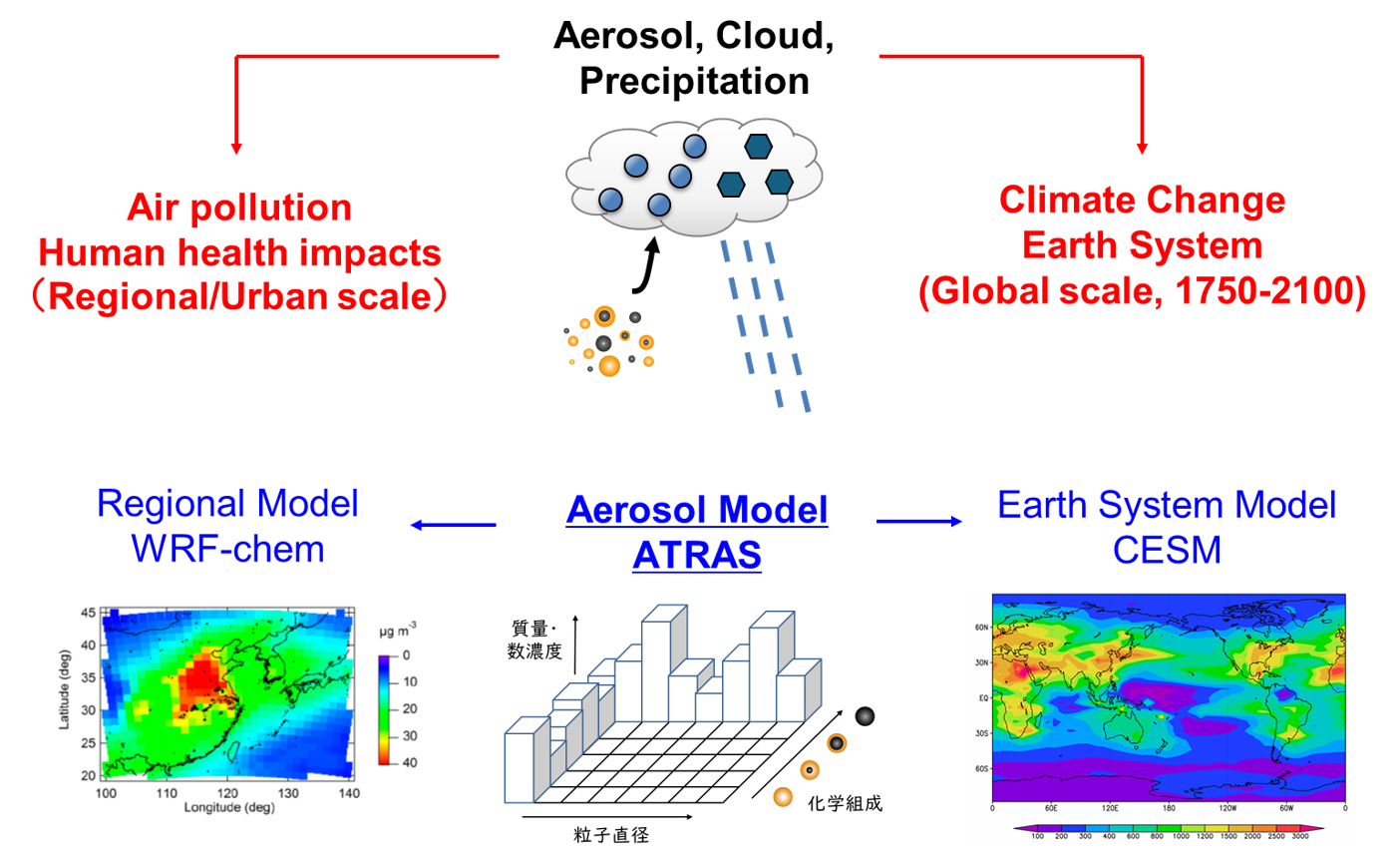
We study the impact of atmospheric fine particles (aerosols) on Earth's climate change and environment.
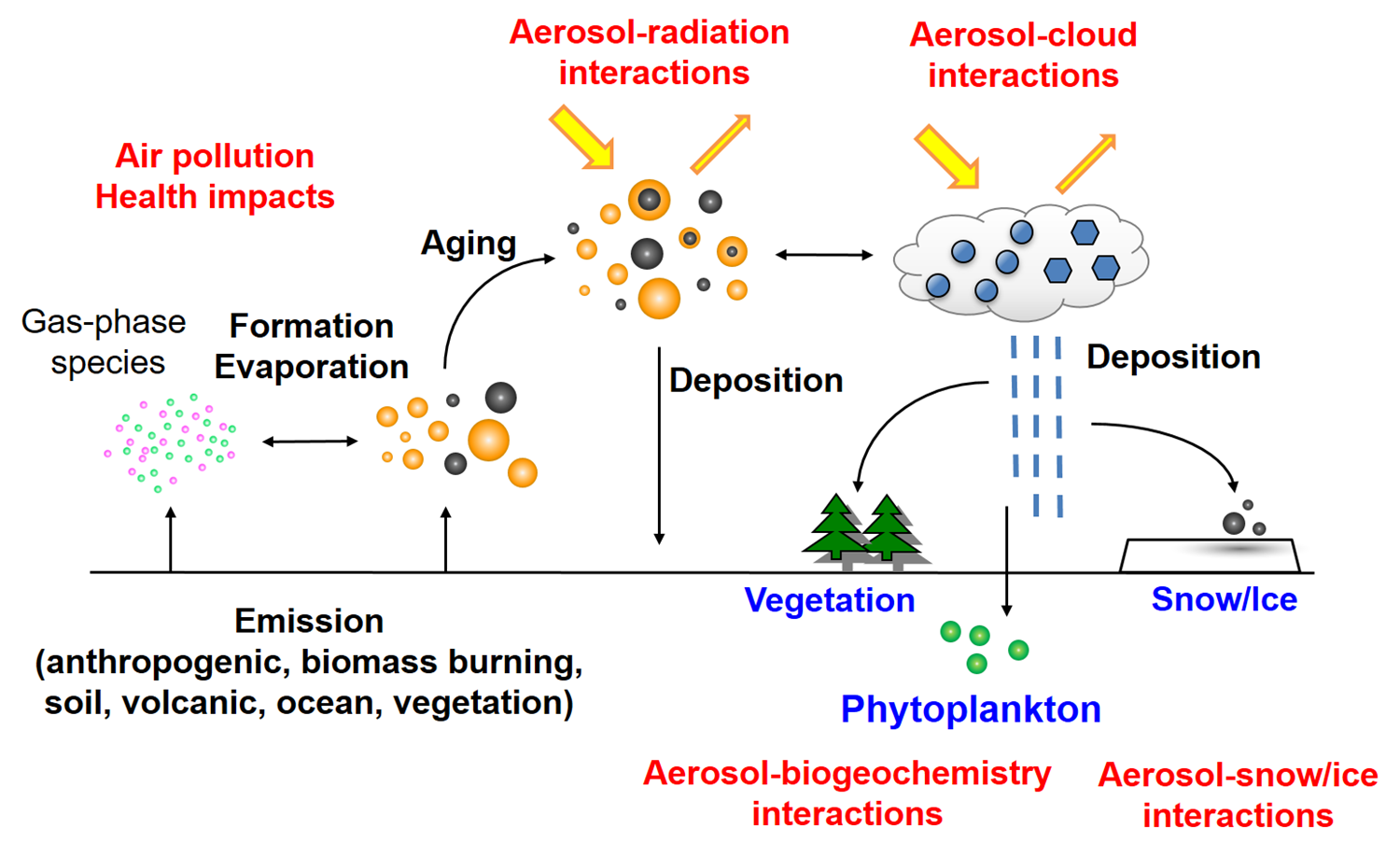
Atmospheric aerosols contribute to the heating and cooling of the atmosphere and the Earth's surface by scattering and absorbing solar and terrestrial radiation, and by modifying the microphysical properties of clouds (e.g., the number and size of cloud particles) and precipitation processes.
When aerosols are transported over long distances in the atmosphere from their emission sources to polar regions or remote oceans, and then deposited on snow/ice and ocean surfaces, they affect snow/ice surface heating and ocean biogeochemistry.
We have developed and applied a climate-aerosol model to understand the importance of such interactions between aerosols and radiation, cloud/precipitation processes, the cryosphere, and ocean/land biogeochemistry for the Earth's climate in the past, present, and future.
Keywords:
Aerosol, Cloud, Precipitation, Climate Change, Arctic Warming, Atmospheric Chemistry, Earth System Modeling, Global Climate Modeling, Ice Nucleating Particles, Cloud Condensation Nuclei, Climate Feedback, Air Pollution, Desert Dust, PM2.5, Ecosystem
(1) Development of a Climate-Aerosol Model
(2) Aerosol-Radiation Interactions
(3) Aerosol-Cloud Interactions
(4) Aerosol-Snow/Ice Interactions
(5) Aerosol-Biogeochemistry Interactions
(6) Aerosol-Cloud-Climate Feedback and Earth System Science
(7) Air Pollution/Air Quality and Aerosol Impacts on Human Health